Owning the brand identity, national tour creative, and website of an educational program for US SMBs, built from scratch to a full content and lead generation platform over three years.
Summary
Alibaba.com Build Up launched in 2019 with no brand, no website, and no creative playbook. Over three years I built the visual identity, national tour creative, and website from scratch, growing the program into a content and lead generation platform for US small businesses. Lead generation grew more than 300% year over year and revenue grew 4x over the life of the program.
Role
Sole Design Lead
Duration
2019-2022
Events
13 live, 20 virtual
Lead growth
300%+ YoY
Revenue
4x growth
A New Platform for a Skeptical Audience
When Alibaba.com launched its first dedicated seller team based in the United States in 2019, it faced two interconnected challenges. The first was perception. Many U.S. business owners had heard of Alibaba.com, but knew it primarily as a sourcing platform where businesses sourced goods from overseas suppliers. Some actively associated it with low-cost imports, not a marketplace where American products could find a global audience. Others confused it with AliExpress, Amazon, Walmart, or other Alibaba Group business units entirely. Very few knew they could sell on it. The second challenge was support. Even American businesses that were open to selling globally often did not know where to start. Navigating an overseas marketplace, setting up a digital storefront, and managing international inquiries required guidance that had not previously existed for U.S. sellers at this scale.
Build Up was the initiative designed to address both. Launched in mid-2019, it was a series of national educational workshops built around one core idea. Alibaba.com had a local team, a local presence, and a genuine commitment to helping American businesses grow globally. Every workshop was designed to answer the questions a skeptical U.S. business owner would walk in with. What is Alibaba.com really? Is it built for a business like mine? And how do I actually get started? The Build Up website and its growing library of content served the same mission, giving business owners a place to find answers on their own terms, at their own pace.
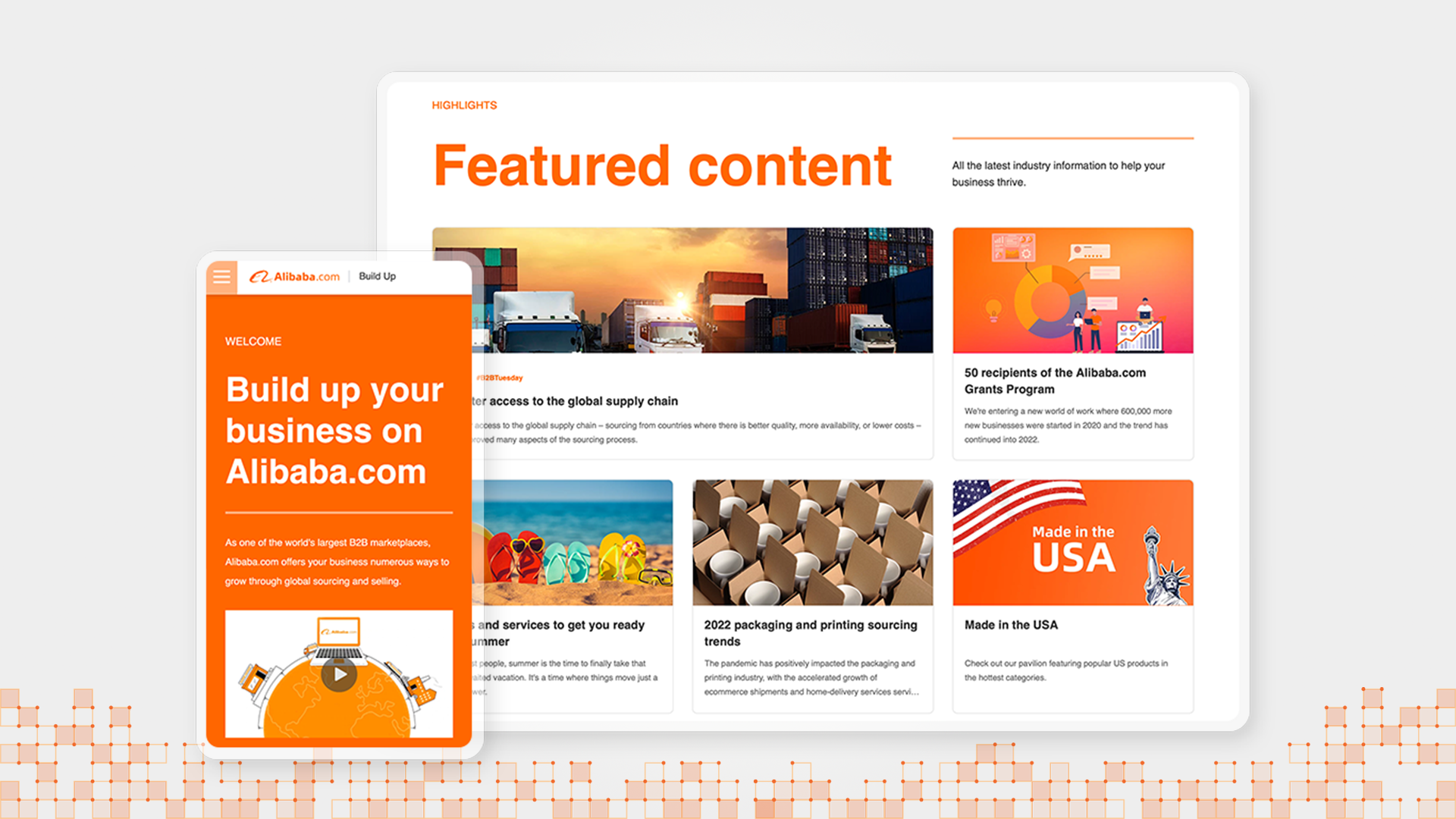
Sole Designer across Brand, Events, and Web
I joined the USA seller team in March 2019, moving from buyer marketing at Alibaba.com, and stayed with the program through Q2 2022. From the start I was the sole design lead, owning everything from brand identity and event materials through to website design, front-end development, and all ongoing updates across three phases. Building the website also meant coordinating IT and engineering resources in China alongside my own design and development work. I owned the project timeline, scoped dependencies early, managed QA, and kept the launch on schedule.
Role and Responsibilities
Brand and Creative Direction
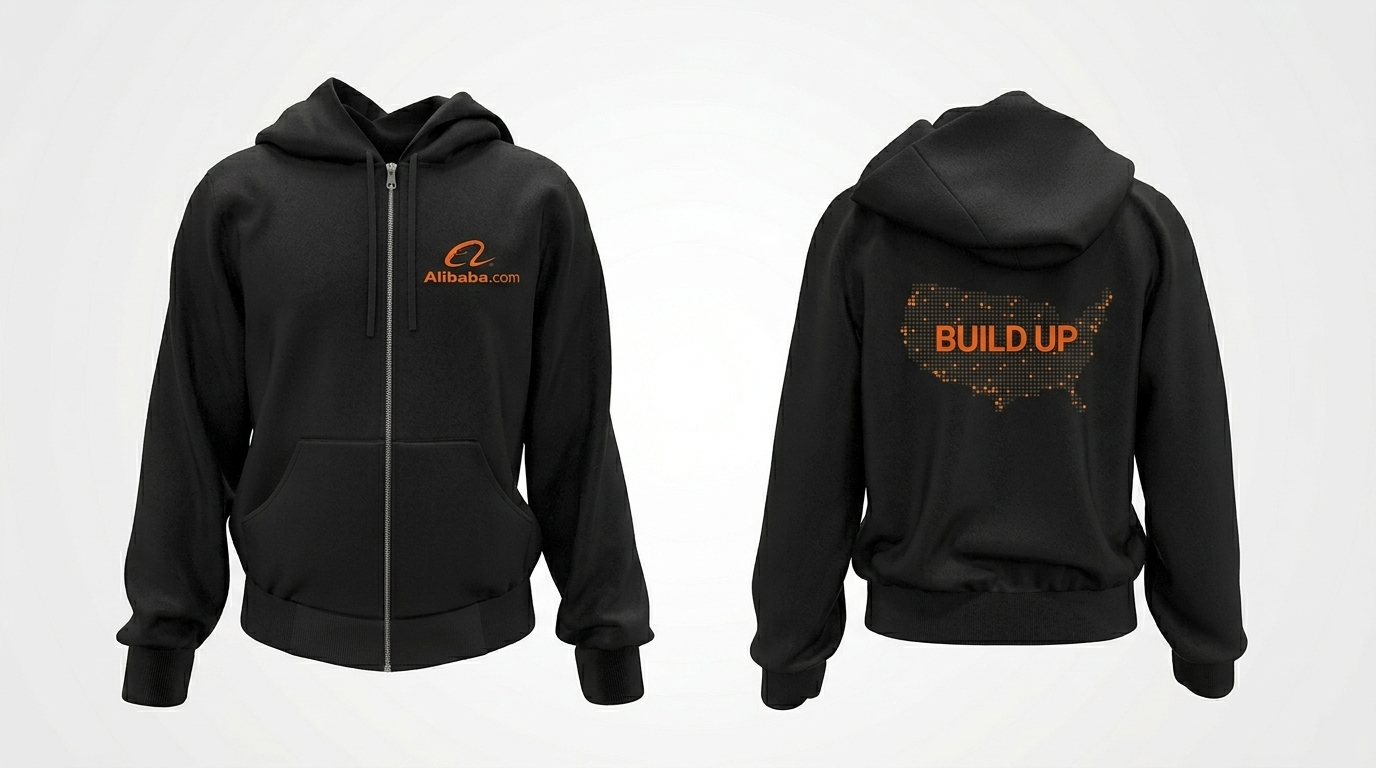
Developed the full visual system from concept, including the U.S. map key visual, block-based design language, and color palette.
National Tour Creative
Designed all event materials across 13 events and 10 cities, including signage, presentation decks, collateral, staff jackets, and tote bags.
Website Design and Development
Owned design, front-end development, CMS setup, third party integrations, and all ongoing updates across three phases over three years.
Content and Digital Events
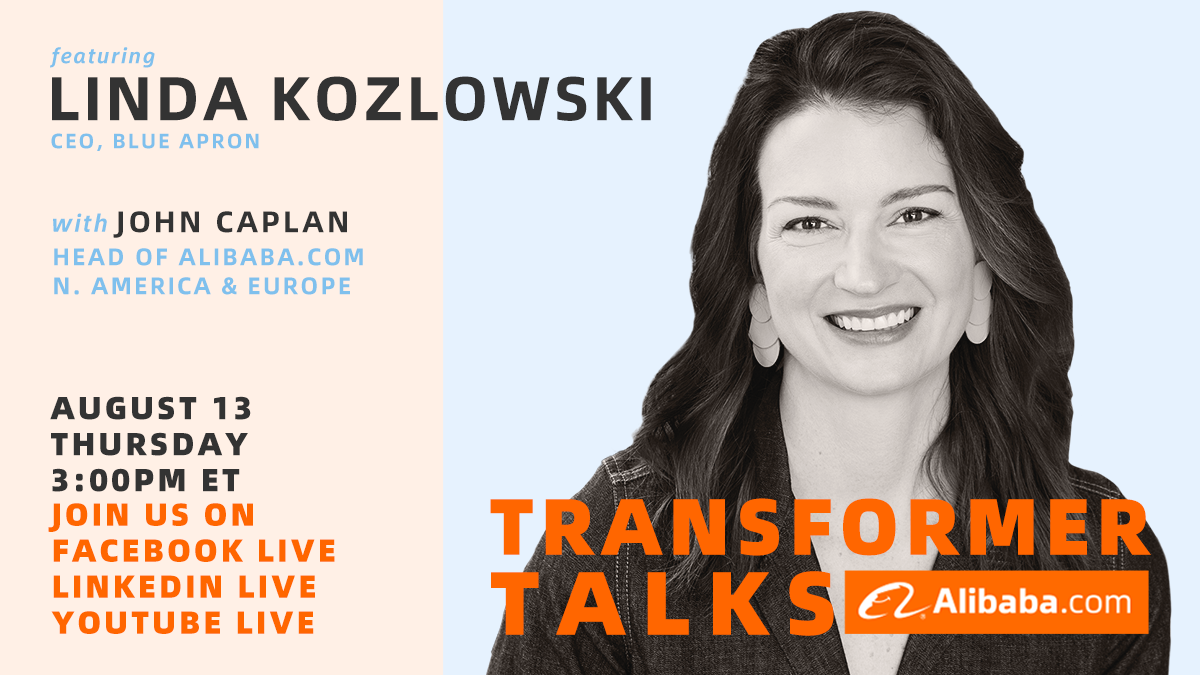
Designed assets for 20 digital events and 400+ content pieces across #B2BTuesday, Expert Tips, Fireside Chats, Transformer Talks, and Customer Stories.
Project Coordination
Managed timelines, IT and engineering dependencies, and cross-functional coordination across marketing, sales, and external partners.
Lead Generation and Analytics
Designed and optimized lead capture across embedded forms and popup, contributing to 300%+ year-over-year lead growth.
- Adobe Creative Suite
- Eventbrite
- Streamyard
- Zoom
- Sketch
- HTML/CSS/JS
- DingTalk
- Trello
- Google Analytics
- Hubspot
The Challenge
Alibaba.com Build Up did not arrive with a brand, a visual system, or a creative playbook. What I received was a name, a mission, and a brief. The program needed to reach U.S. small business owners who were skeptical of Alibaba.com at best and completely unaware of it as a selling platform at worst. Every piece of creative had to do two jobs at once. It had to feel credible and professional enough to earn trust from an audience that had real reasons to be doubtful, and accessible enough to make global selling feel like something they could actually do.
The scope of what needed to exist was significant for a team that was still being built. A complete brand identity and all the event materials for a national tour spanning ten cities had to be ready for a first event in July 2019. The website would come later, but it would be designed, built, and launched from scratch, with full ownership sitting with me.
Brand Identity and Key Visual System
The name carried the concept within it. Alibaba.com Build Up was chosen to reflect what the platform could offer U.S. SMBs at every stage of their journey, whether they were just starting out with an idea, getting a business off the ground, looking to grow, or ready to expand into new markets. That range of ambition was exactly what I wanted the visual system to reflect. I translated it into a language of geometric shapes and layered blocks, with a secondary pattern of lines and dots building upward to represent businesses at different stages. Some fully established, some just getting started.
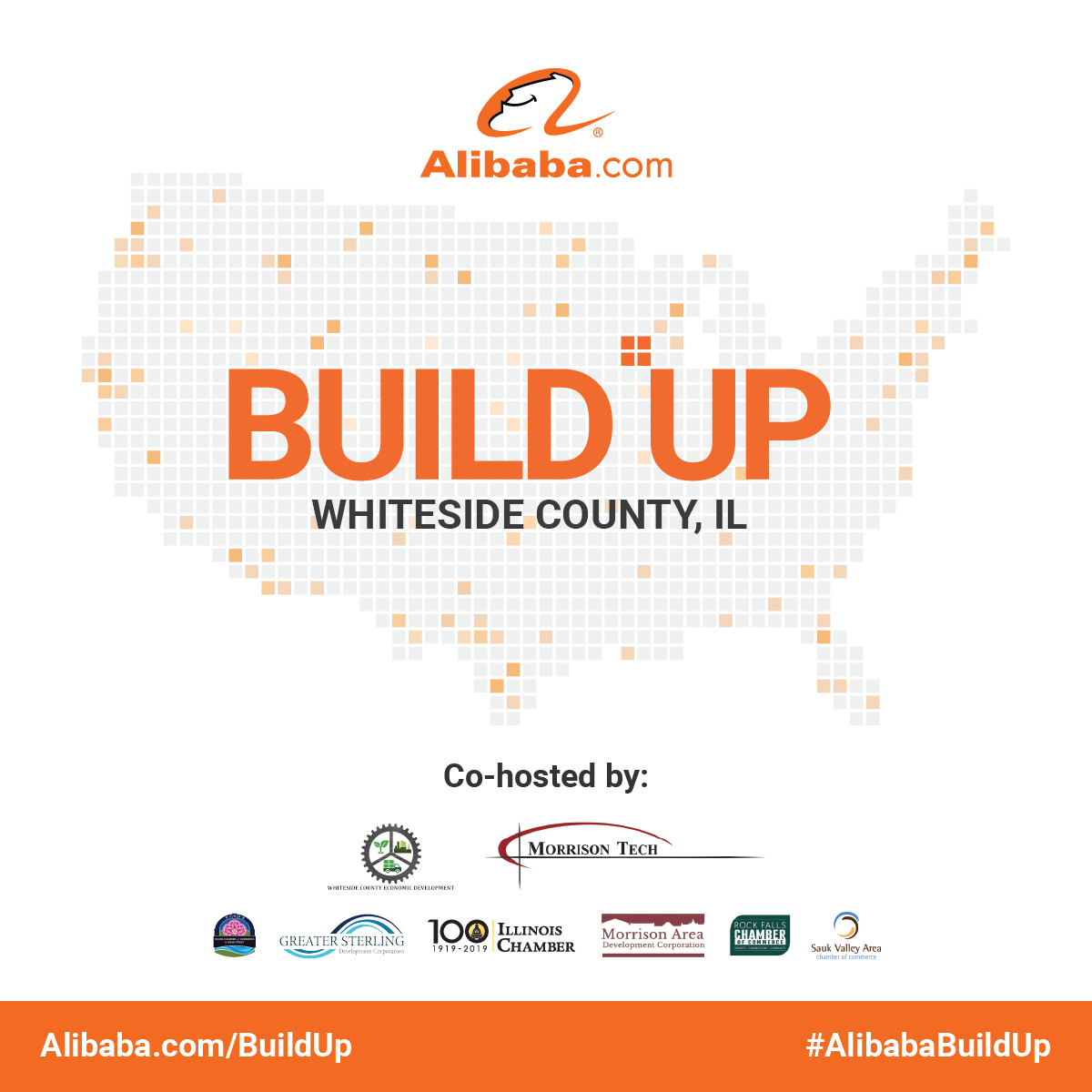
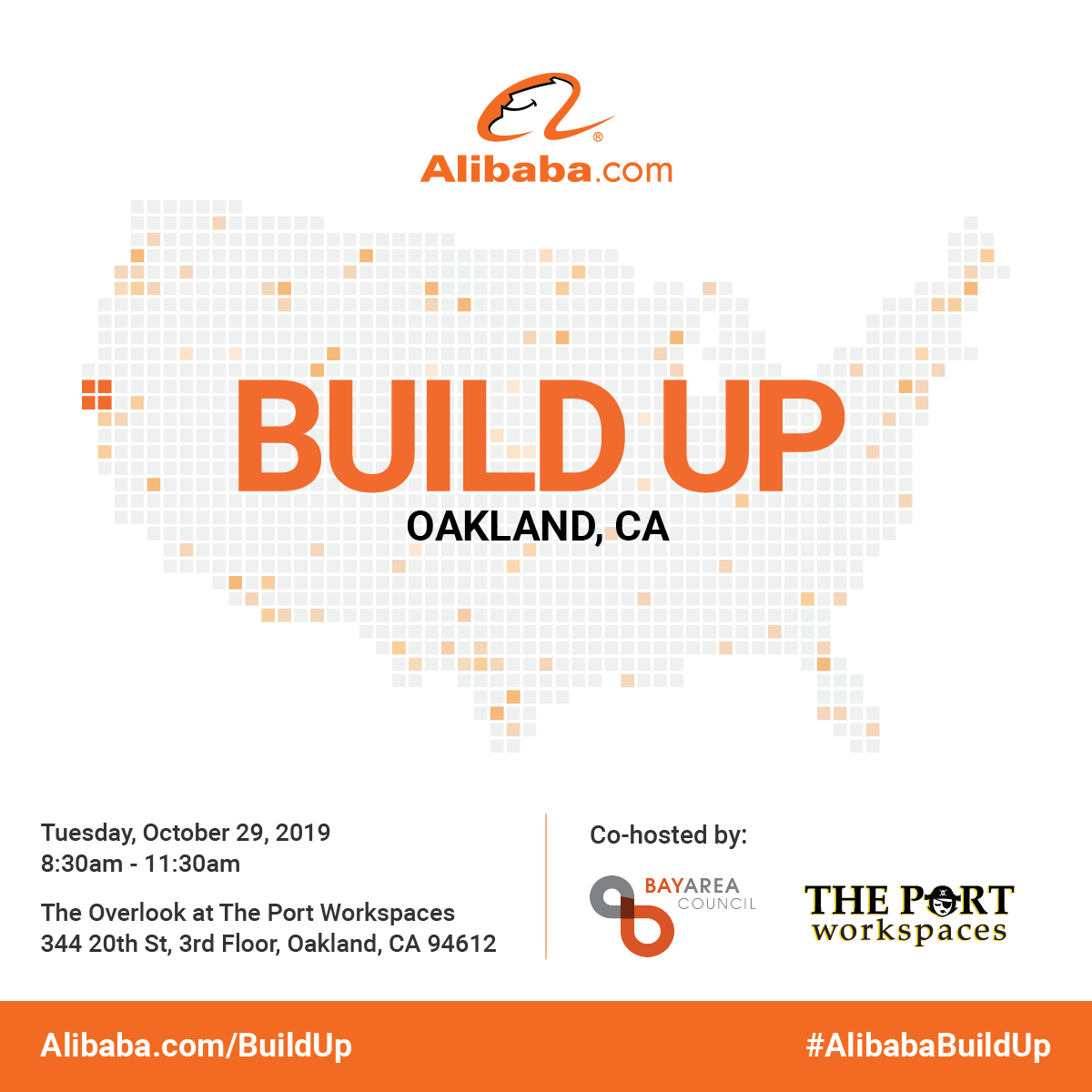
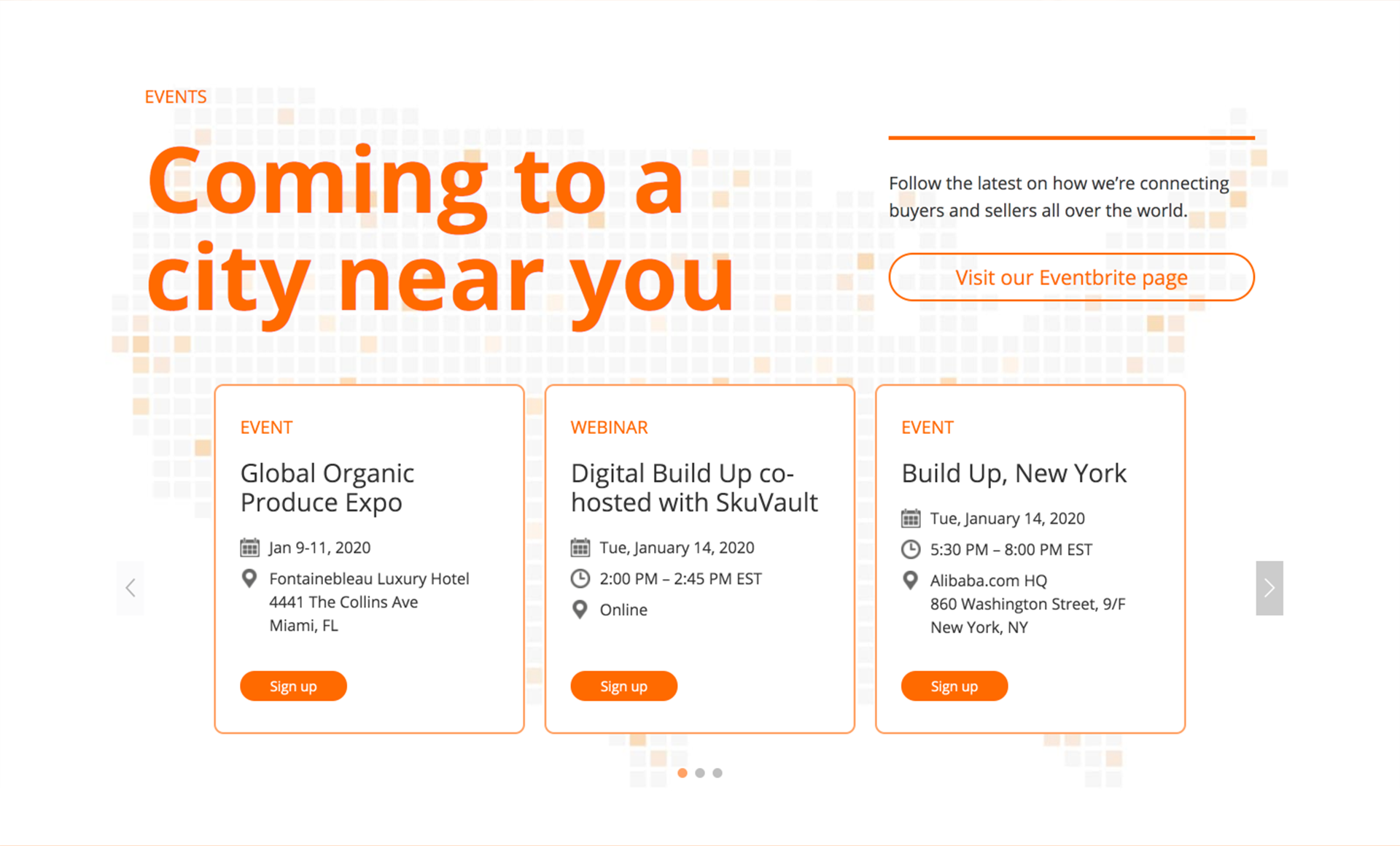
The hero visual brought the concept into focus. I designed a map of the United States assembled from squares in varying shades of orange and light grey, with darker orange marking major cities and ports. Each square on the map represented an American business. When Build Up came to a city, that square turned solid orange. It made the national reach of the program visible and gave each event stop a sense of meaning within the larger picture.
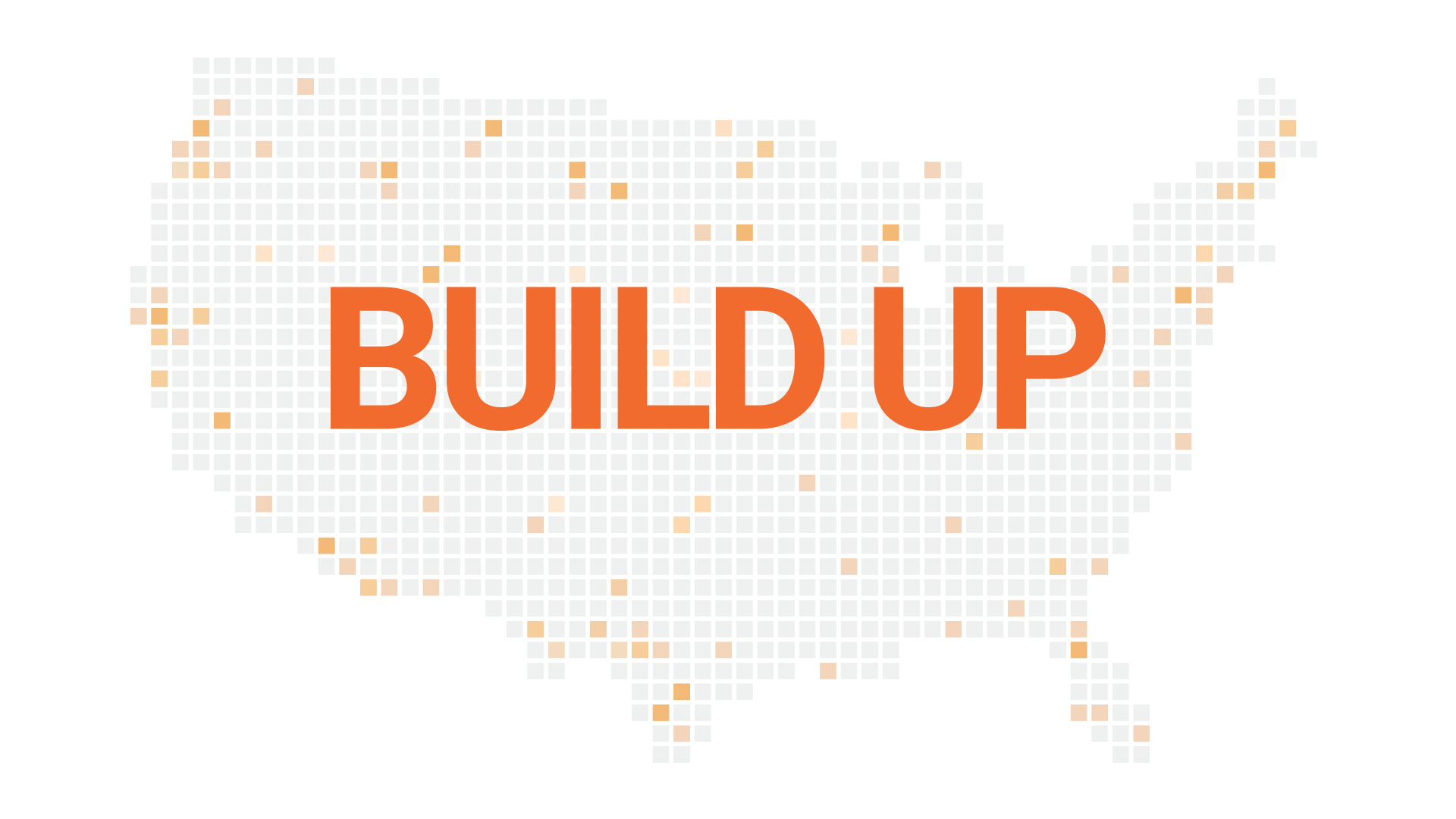

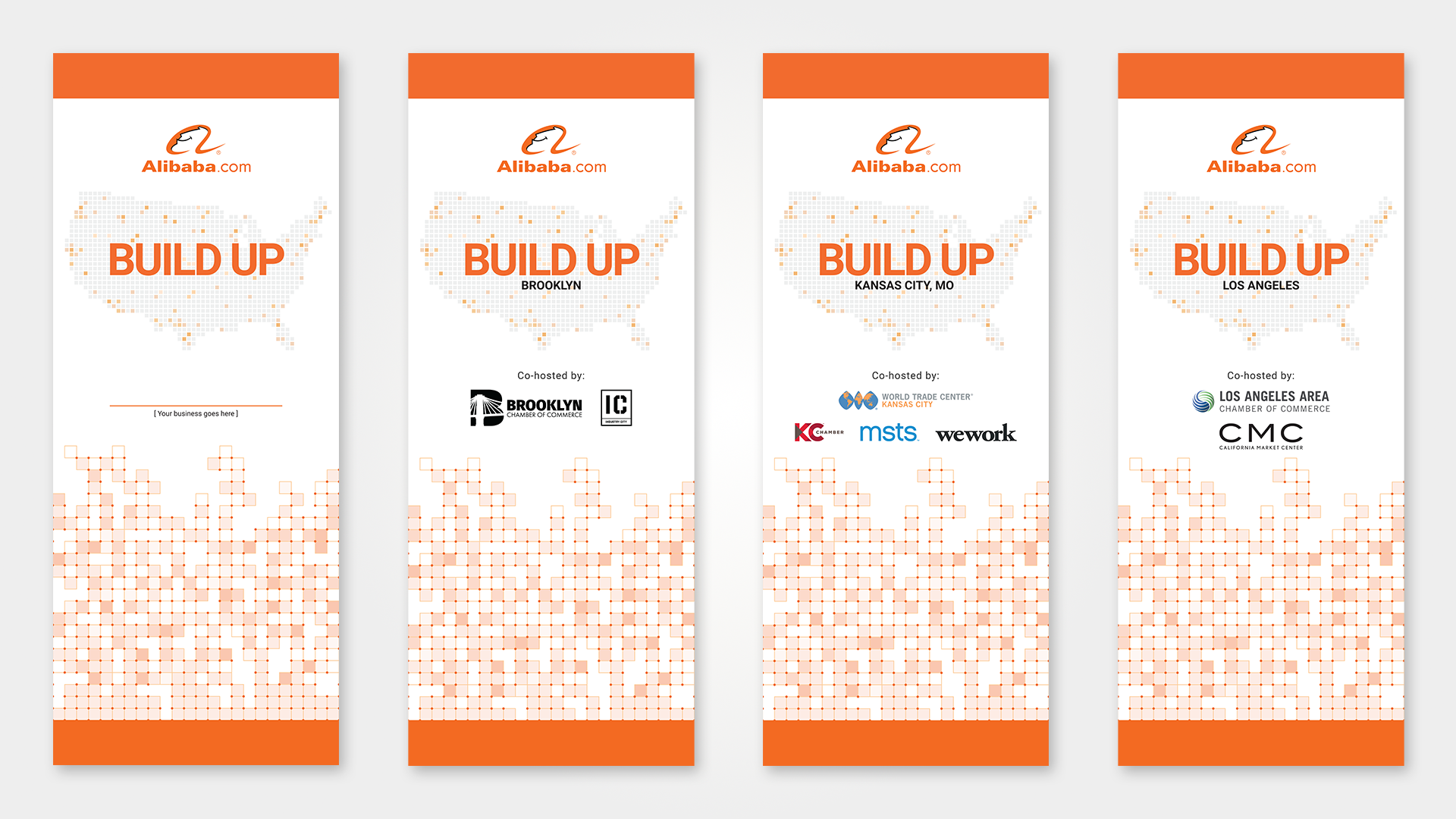
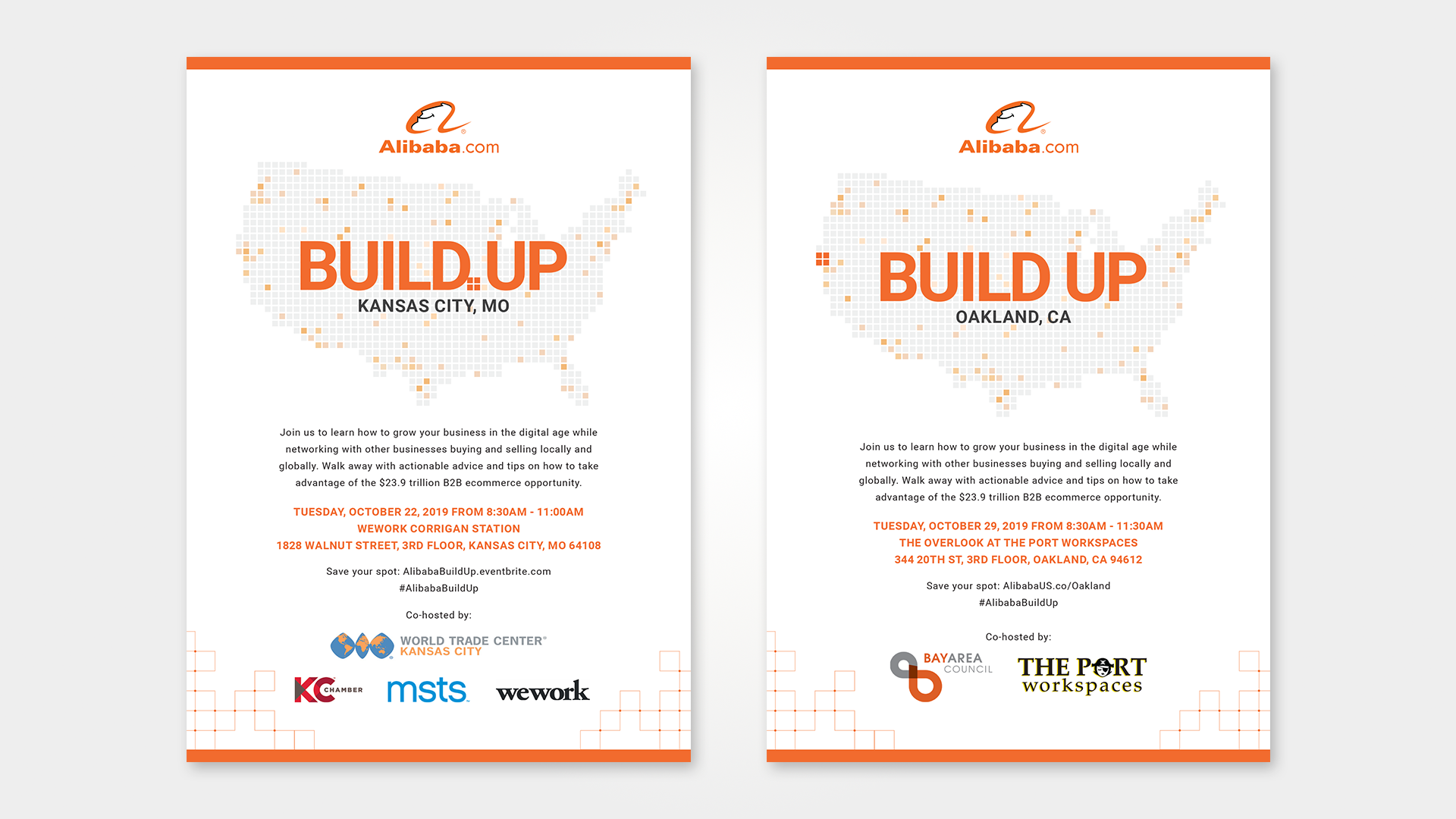
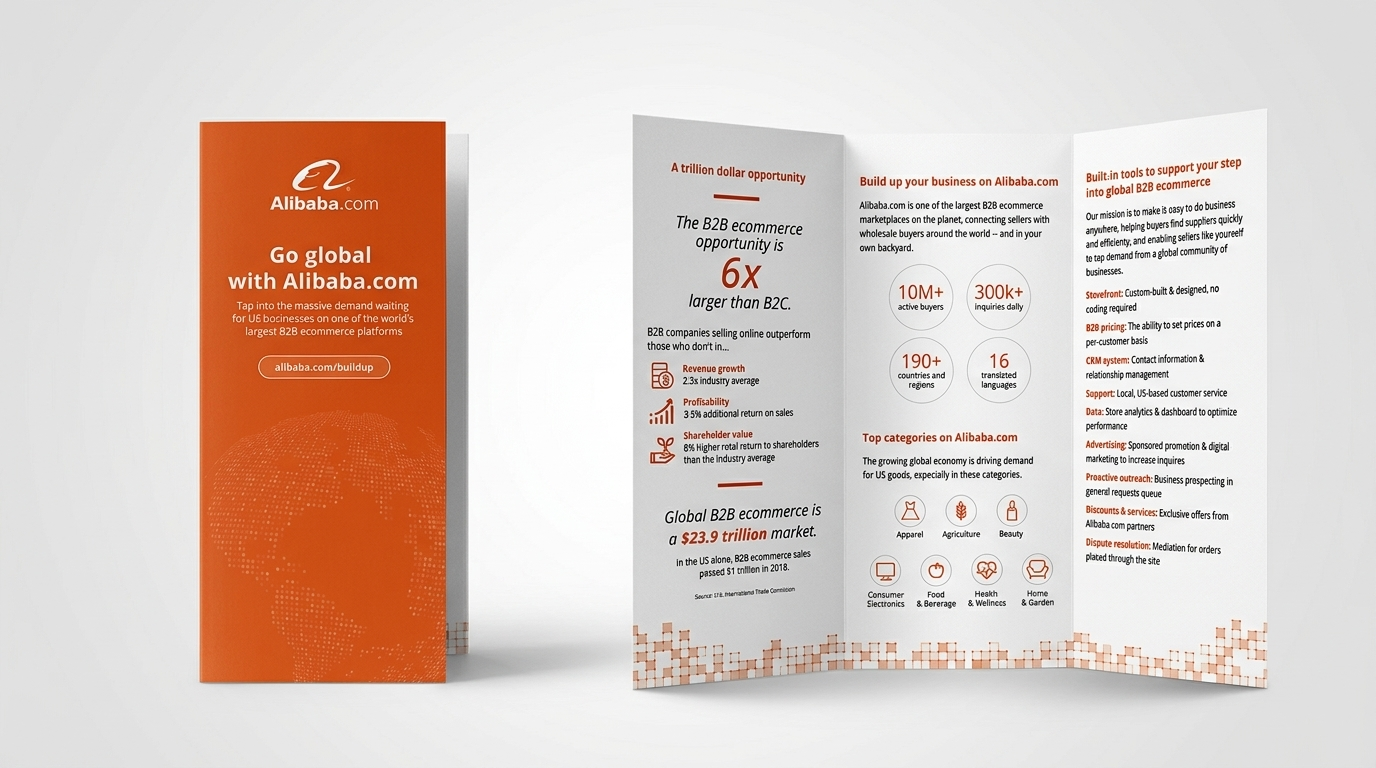
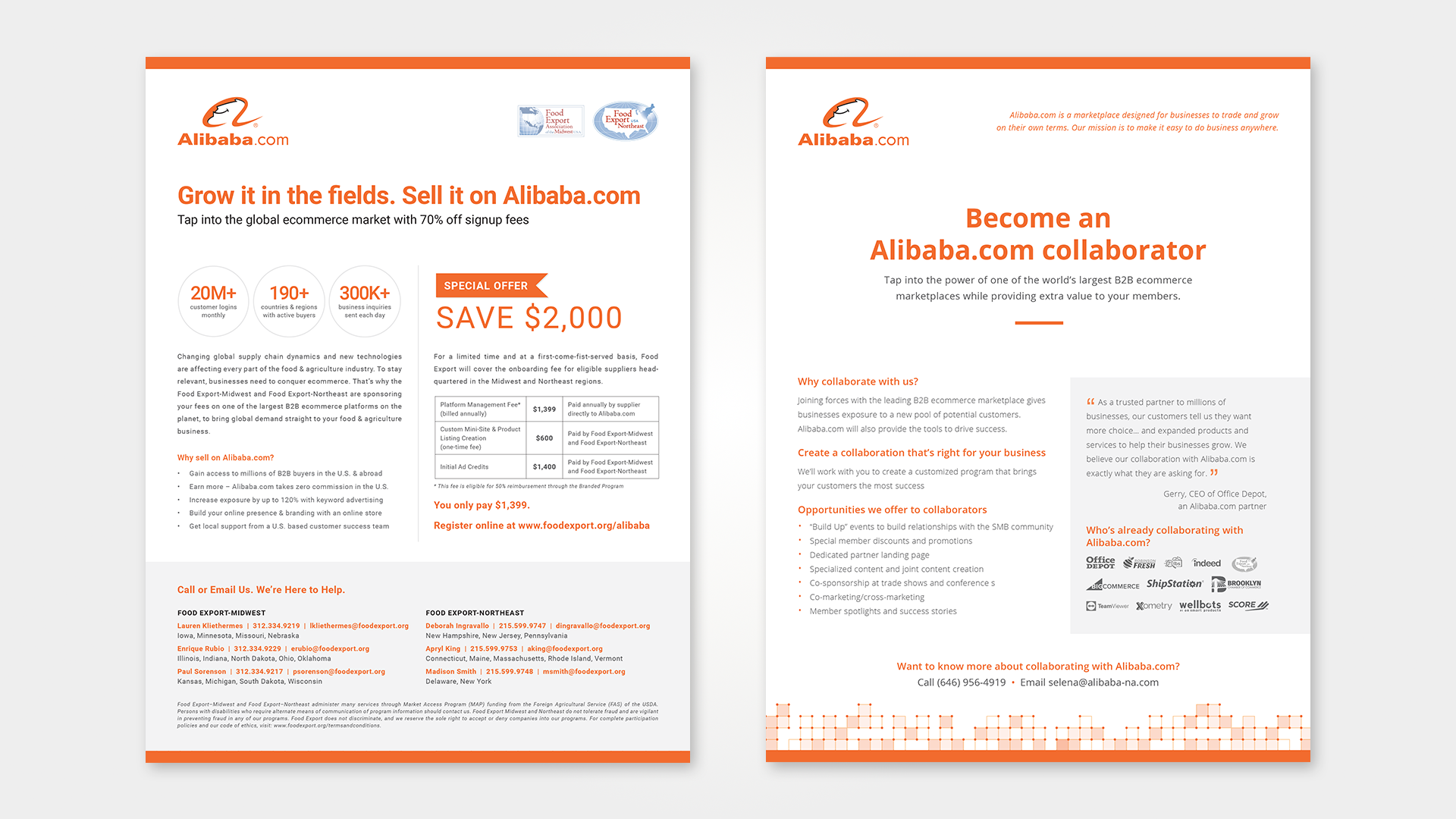
The system expanded to cover brochures, event signage, invitation cards, presentation decks, printed collateral, staff jackets, and social graphics. Alibaba.com’s brand orange carried consistently across every touchpoint, from the event floor through to the website, tying the full program together under one visual identity.
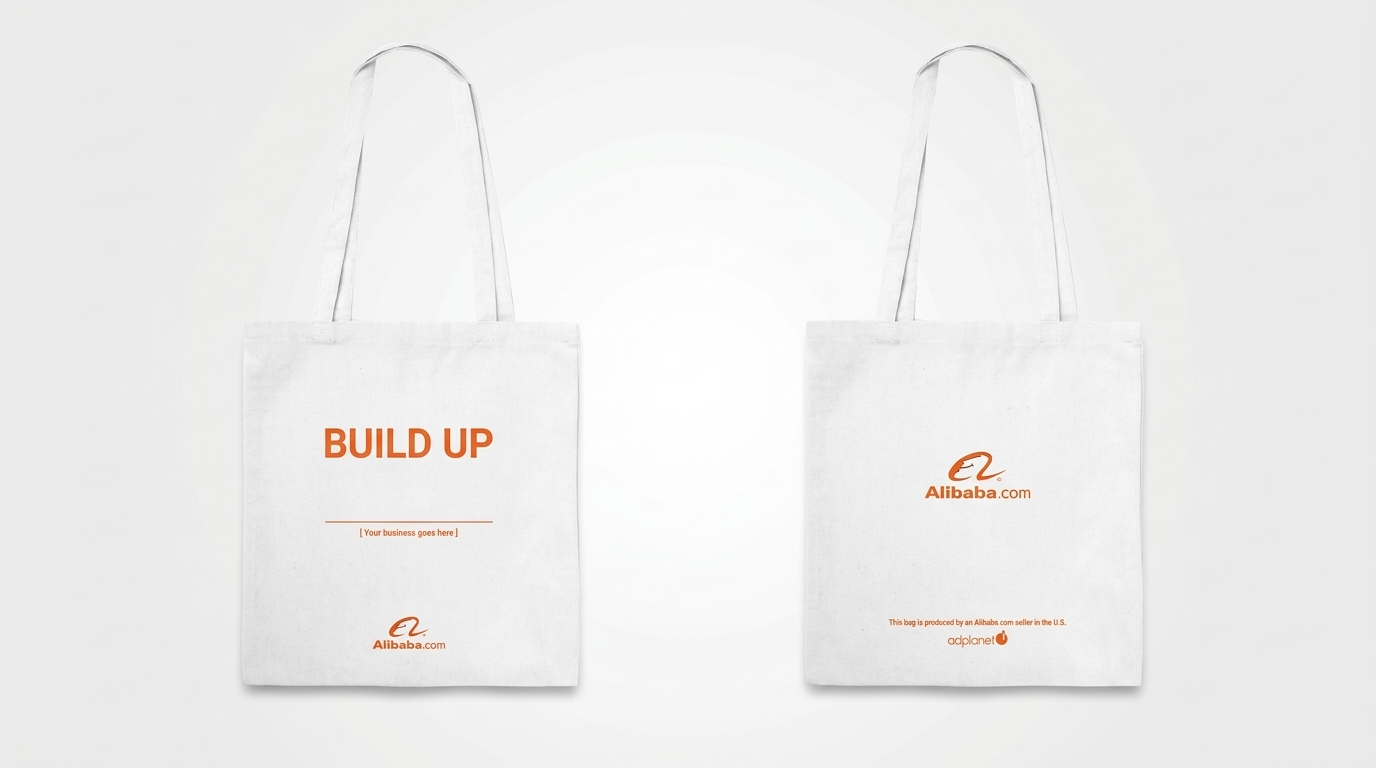
The tote bags distributed to attendees at every stop were produced by USA sellers on Alibaba.com. Each bag also included a space for the attendee to write in the name of the business they were there to build up. It was a small touch, but it made the bag personal and turned a piece of branded collateral into something worth keeping.
The National Tour
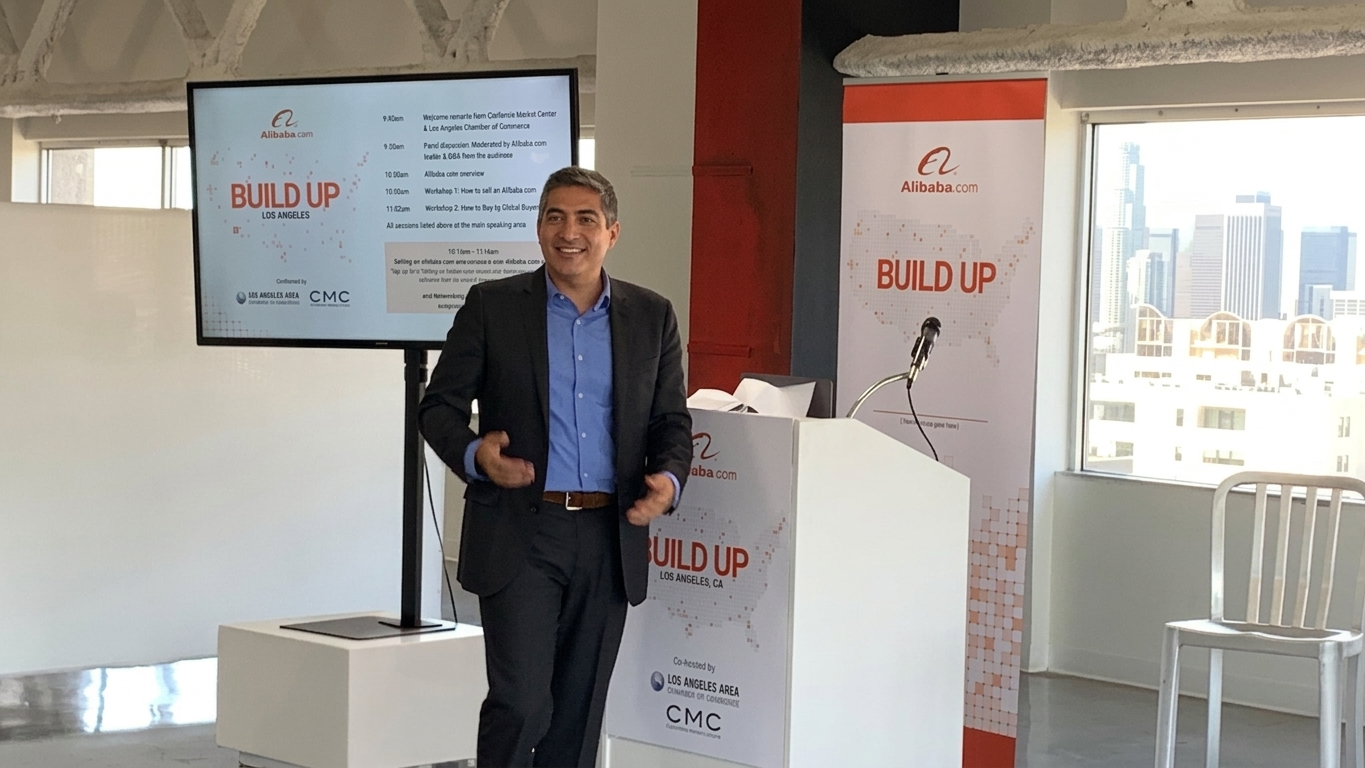
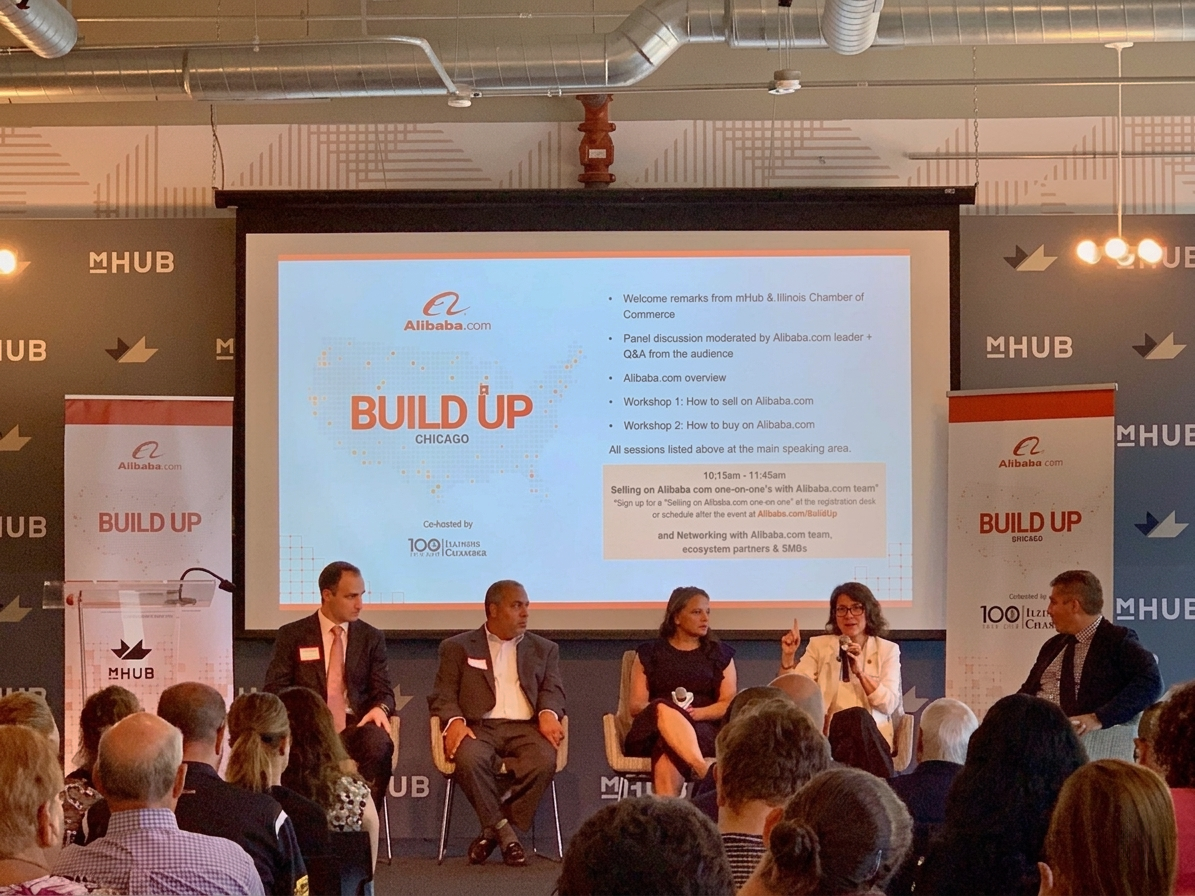
The first Build Up event launched in July 2019 at Industry City in Brooklyn. The team was based in New York, and starting there felt right. It was where the journey began, and it set the tone for everything that followed. From that point the tour moved fast, reaching ten cities across the country and running thirteen in-person events that each brought together between one hundred and five hundred attendees.
Every event was designed to feel like a workshop, not a sales pitch. The goal was to give U.S. business owners a room where they could ask real questions and leave with a clearer sense of what selling on Alibaba.com actually looked like for a business like theirs. Partnering with local Chambers of Commerce and organizations like SCORE gave each stop a credibility it could not have built on its own. Business owners were more likely to show up for an event their local chamber had endorsed than for one organized solely by a company they were still forming an opinion about.
As the sole designer, I was responsible for every piece of creative that showed up at each venue. Event signage, printed collateral, presentation decks, and branded staff jackets all had to hold up across different venues, different cities, and different audience sizes. Keeping the brand presence consistent from one stop to the next was something I was focused on getting right from the beginning.
The launch drew wide coverage in retail and tech media. Outlets like Retail Dive and EcommerceBytes framed the story around Alibaba.com flipping the script, describing the move from a place where American businesses sourced goods to a platform where they could sell to the world. The interest was real, but so was the skepticism. That was the room we were walking into at every stop.
The COVID Pivot
When the pandemic hit in early 2020, the in-person tour paused. The program adapted rather than waited. The businesses we were trying to reach were facing some of the most disorienting challenges of their working lives. Customers had disappeared, supply chains were broken, and business models that had worked for years no longer did. Build Up had a real opportunity to show up for them differently.
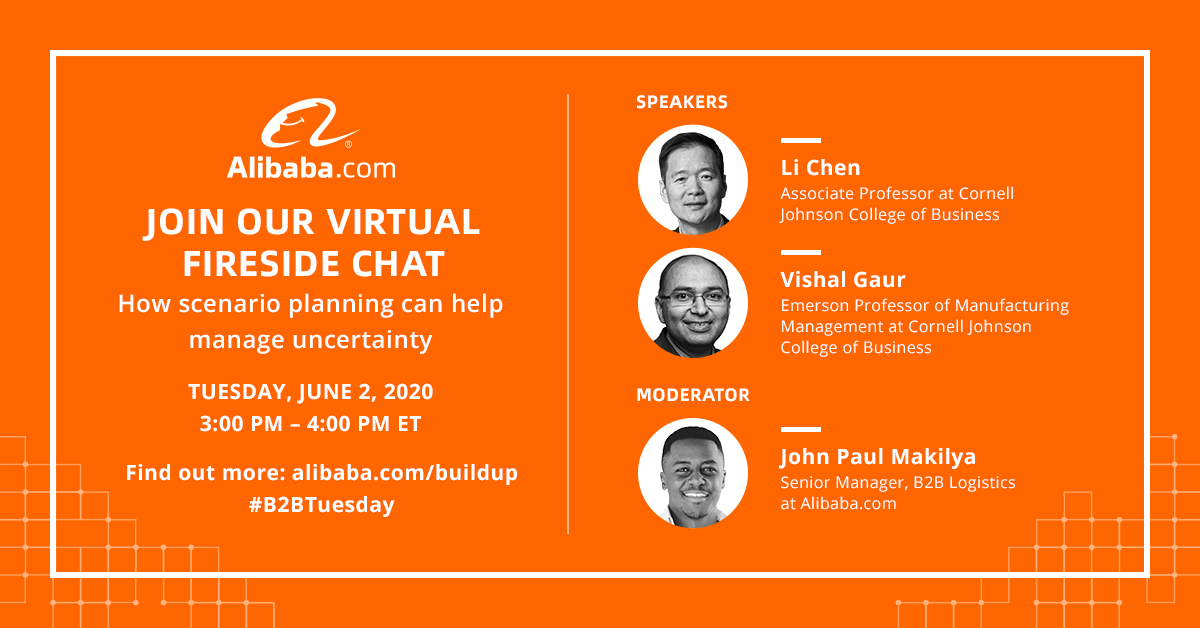
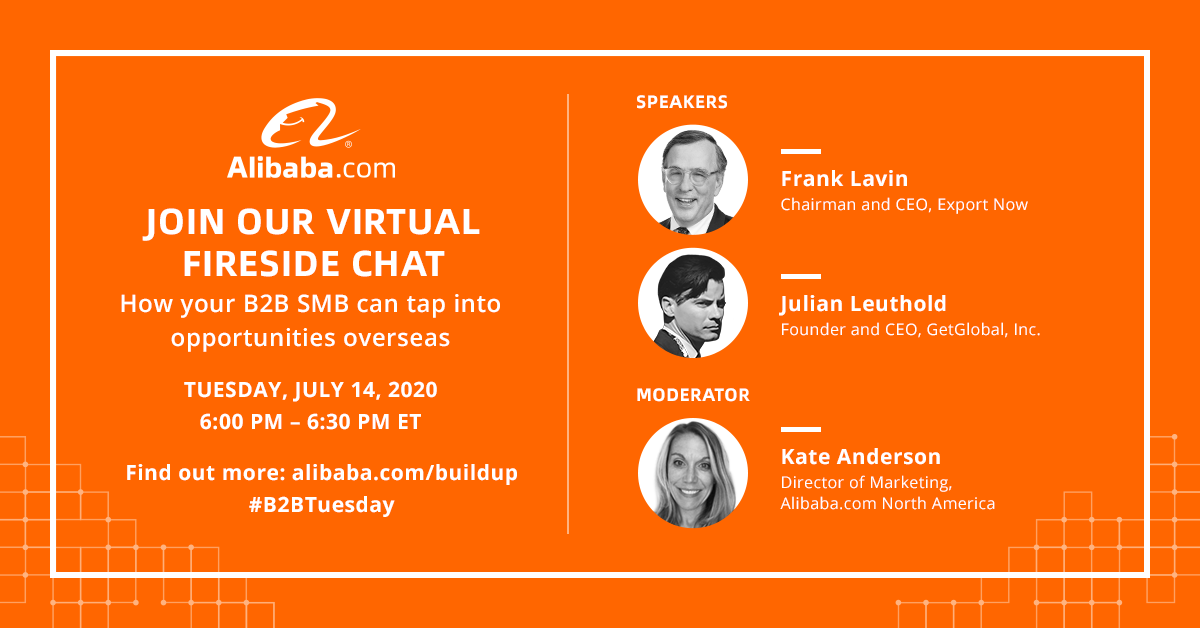
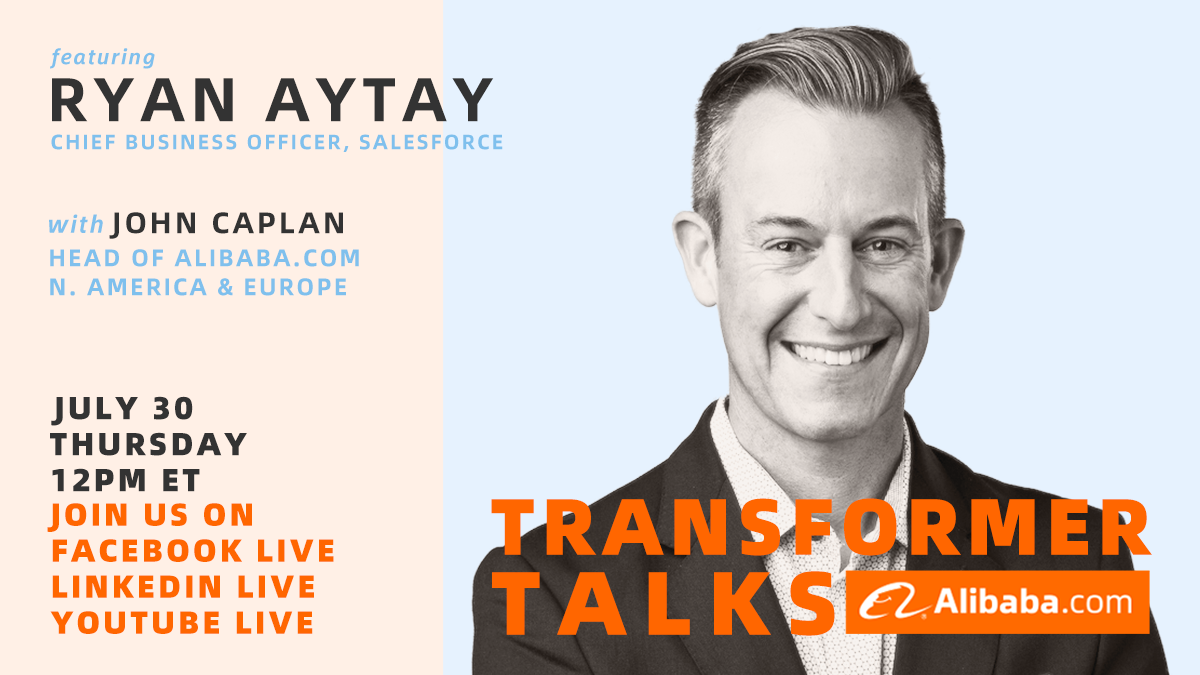
Alibaba.com stepped into the role of an industry resource, not just a platform trying to recruit sellers. The content program expanded significantly, covering global trade, finance, logistics, crisis response, and success stories from U.S. businesses that had turned disruption into opportunity. Digital events replaced the in-person tour and gave business owners a way to stay connected and keep learning. I designed all graphic assets, edited video content, and developed and updated every page as the program grew.
In FY21 alone, I designed assets for over 180 new pieces of content and created social graphics across Facebook, Instagram, LinkedIn, Twitter, and YouTube, supporting more than 20 percent follower growth across those channels.
The Build Up Website
A few months after the national tour launched, a PR agency engaged by the team shared a wireframe for a B2B seller hub aimed at U.S. SMBs as the company continued its expansion into the states. After a few rounds of wireframe and mockup review, the agency passed the source files over and I took full ownership of the project from that point forward. Working directly with the head of marketing, I finalized the design and content. Getting it live required IT and engineering resources in China, so I started coordinating with both teams early while the design was still being finalized, scoping dependencies and locking in a delivery date so I could build my timeline around it. Design, coordination, and front-end development ran in parallel. Once the domain alibaba.com/buildup and CMS modules were ready, I QA tested everything including all third party integrations such as HubSpot and Google Analytics, flagged any issues, and continued my own development work while waiting on fixes from the engineering side. The entire site went live in approximately two weeks, on schedule.
PHASE 1: Launch (Q4 2019)
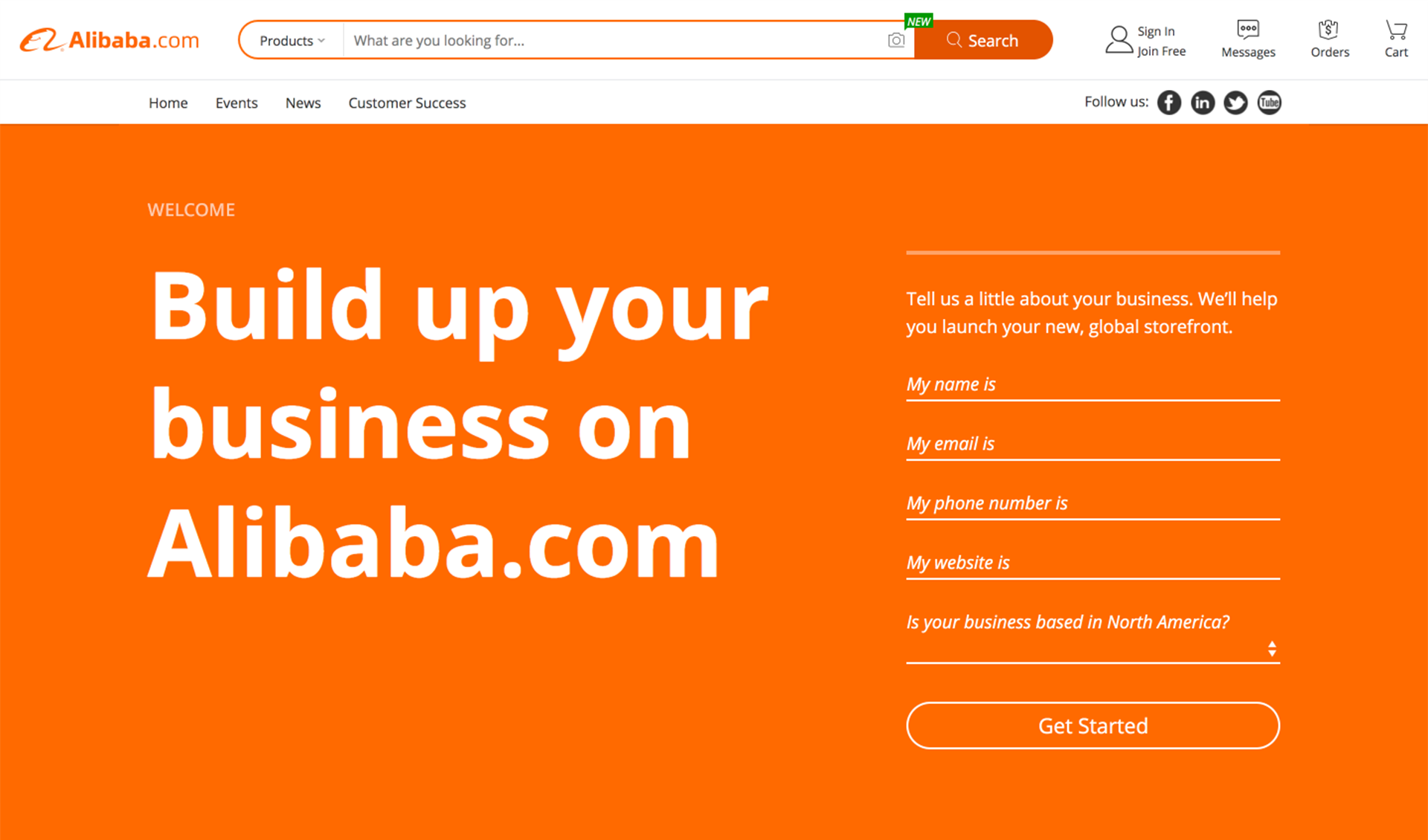
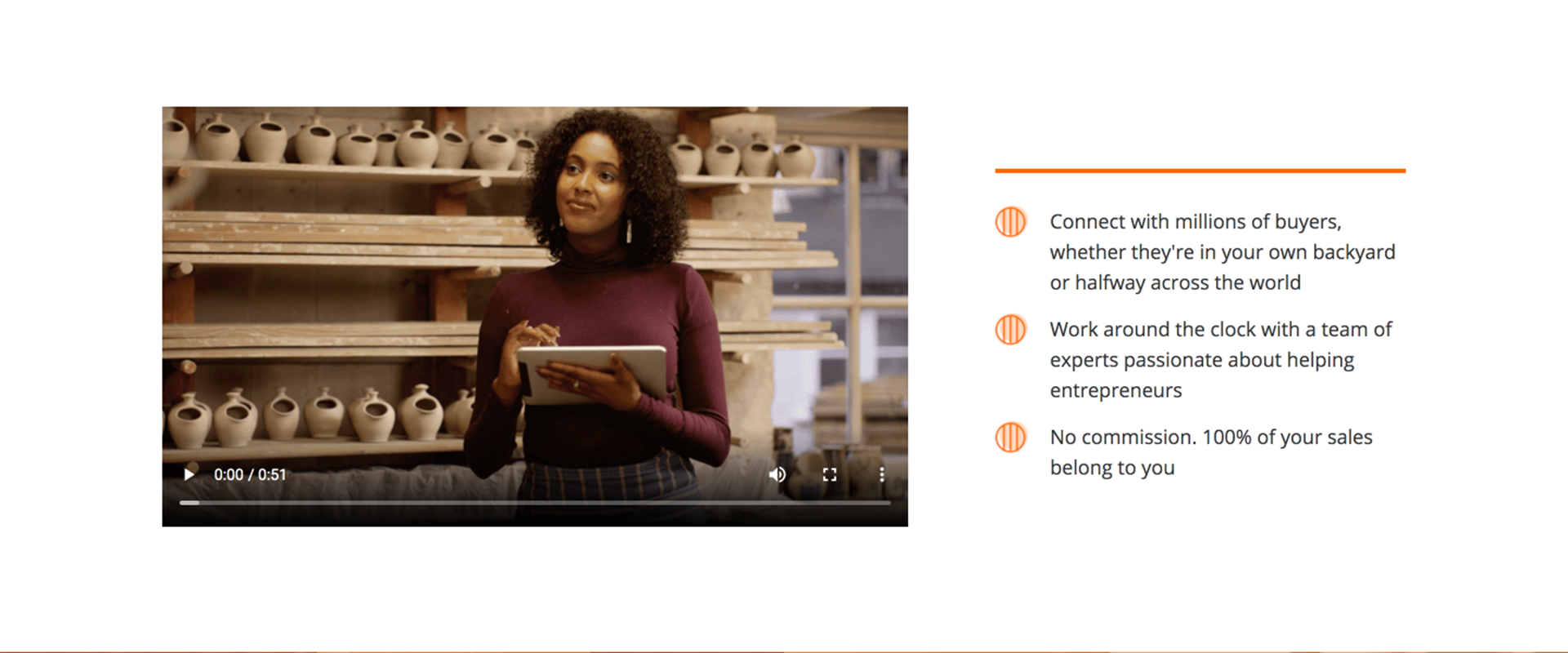
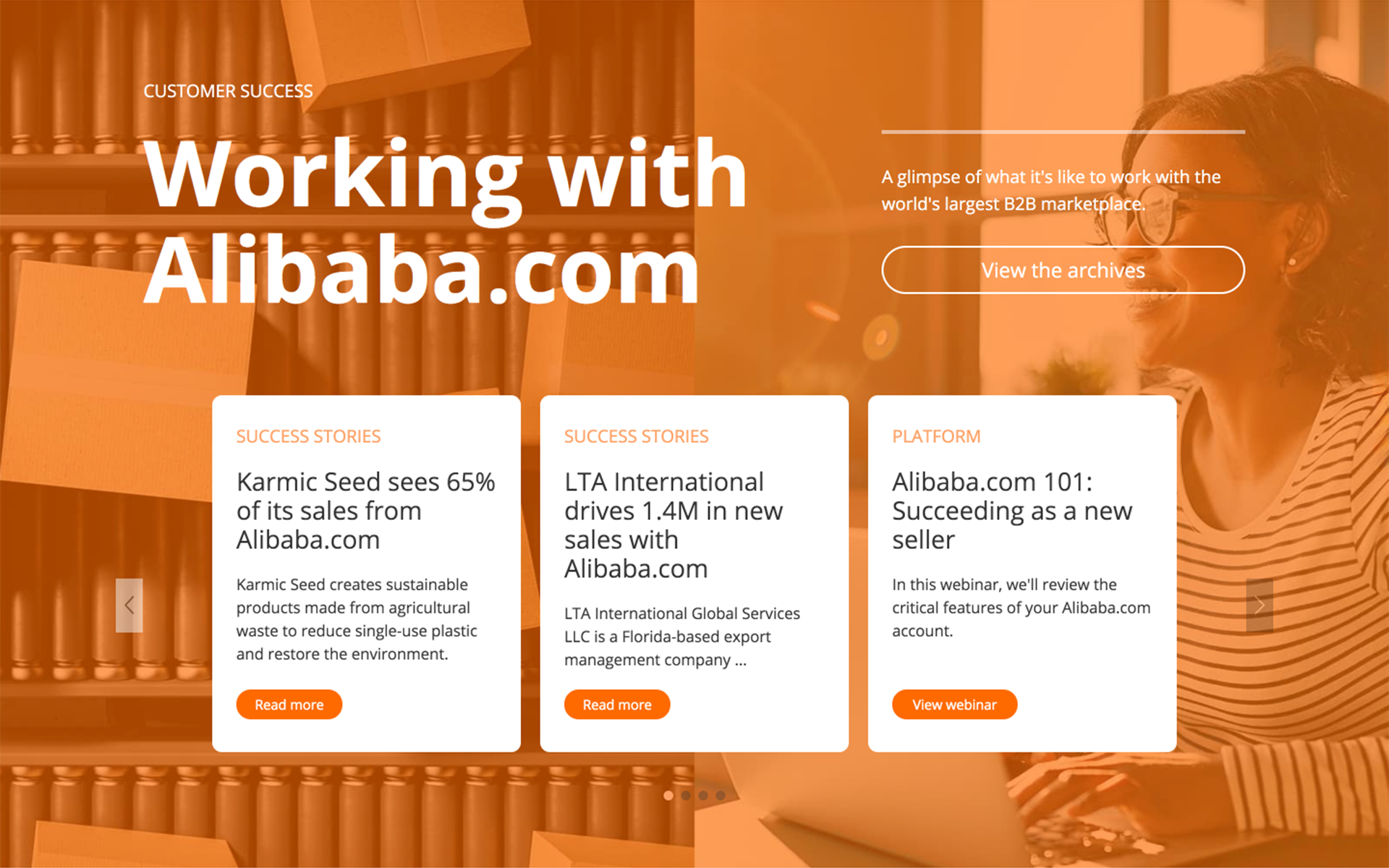
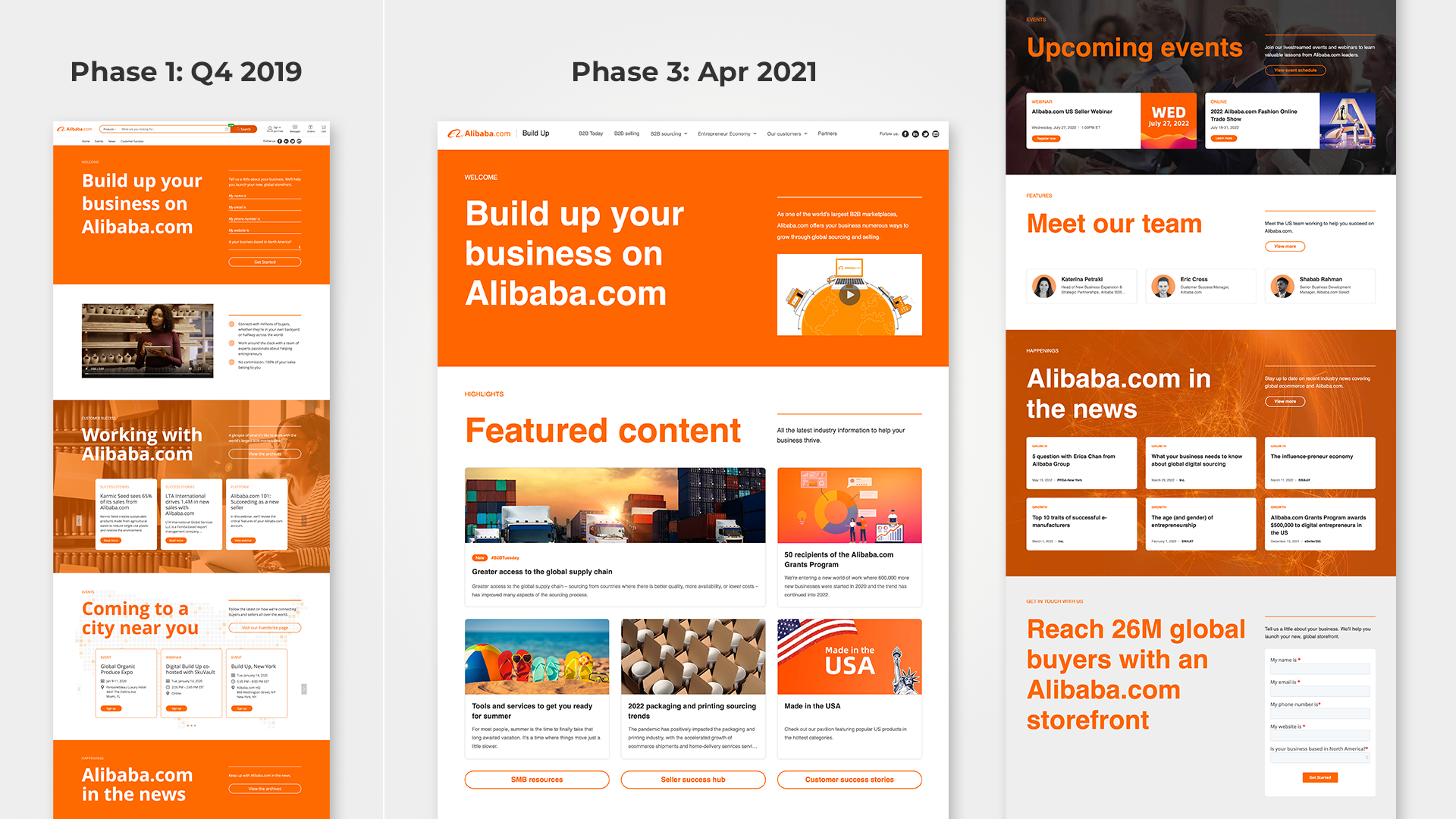
The site launched with one clear priority. Our team KPI was lead generation for the sales team, and every section of the homepage was designed to do a specific job in earning trust and capturing intent from an audience largely unfamiliar with Alibaba.com as a selling platform.
The welcome section led with a lead capture form. Getting a visitor’s contact information at the moment of first arrival was the most direct path to feeding the sales pipeline, so there was no reason to bury it.
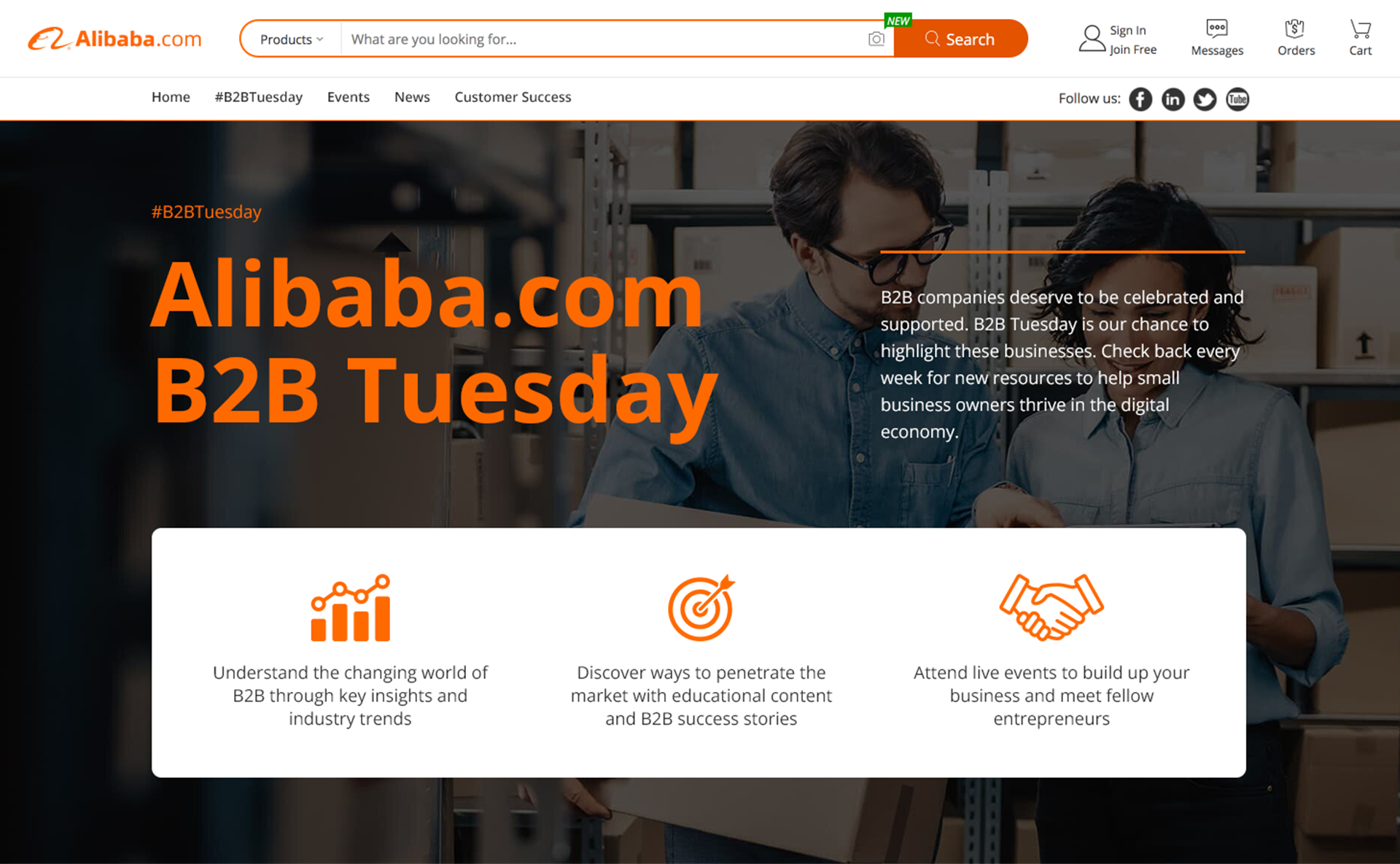
The customer success section brought #B2BTuesday articles, platform guides, seller success stories, and team profiles together in one place. Each element was doing a different trust-building job. Seller stories gave skeptical visitors proof that the platform worked for businesses like theirs. Team profiles addressed a specific problem the sales team had flagged. U.S. business owners did not know Alibaba.com had U.S. offices or a USA-based customer success team, and a cold call from an unknown number raised spam concerns. Having visible team profiles gave sales something concrete to reference in email footers and on calls, turning a credibility gap into a selling point.
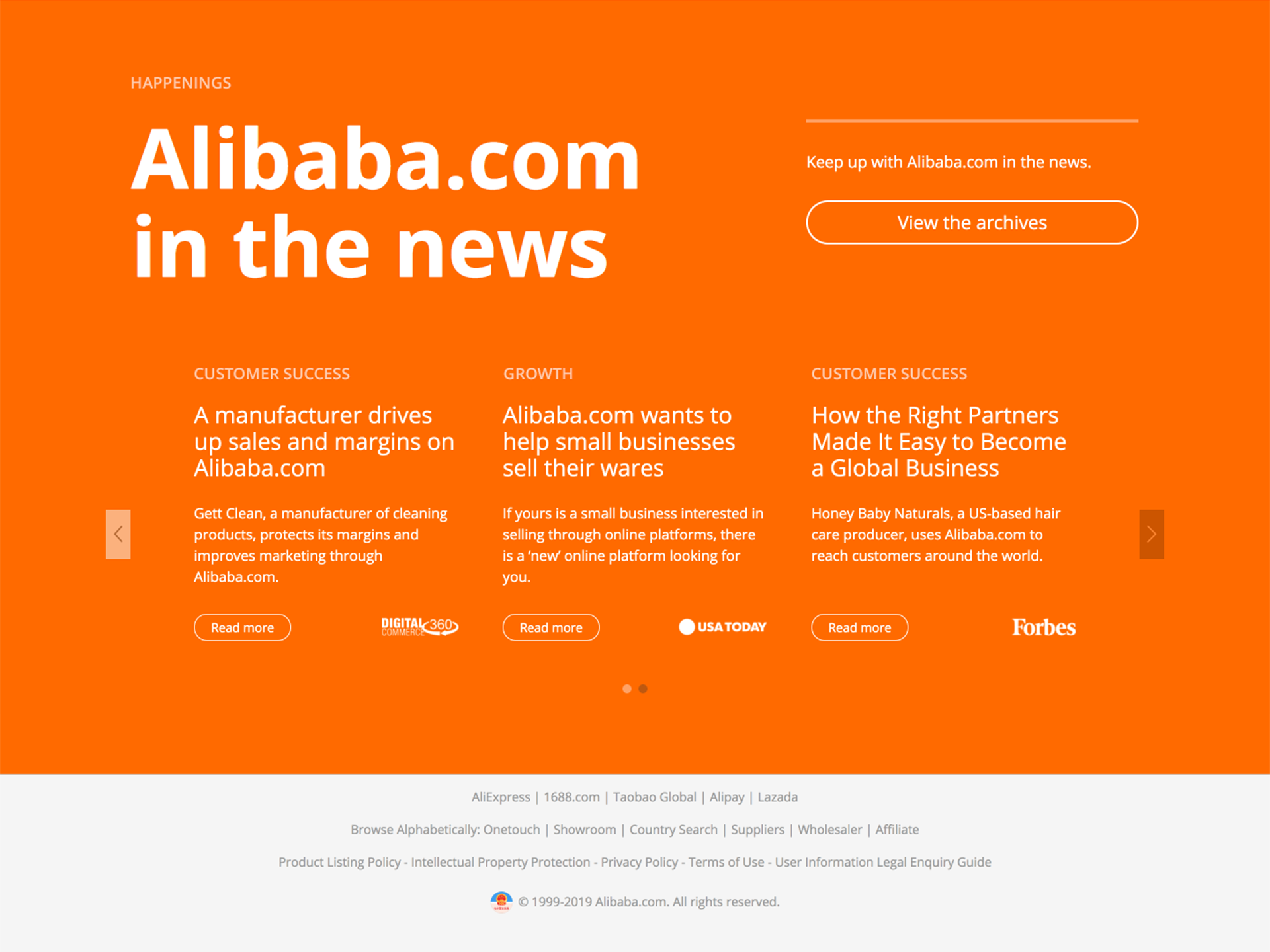
The events section kept the national tour visible and drove attendance. The news section closed the page with third-party news coverage of Alibaba.com, adding external validation for visitors still forming an opinion.
PHASE 2: Content Expansion (Early 2020)
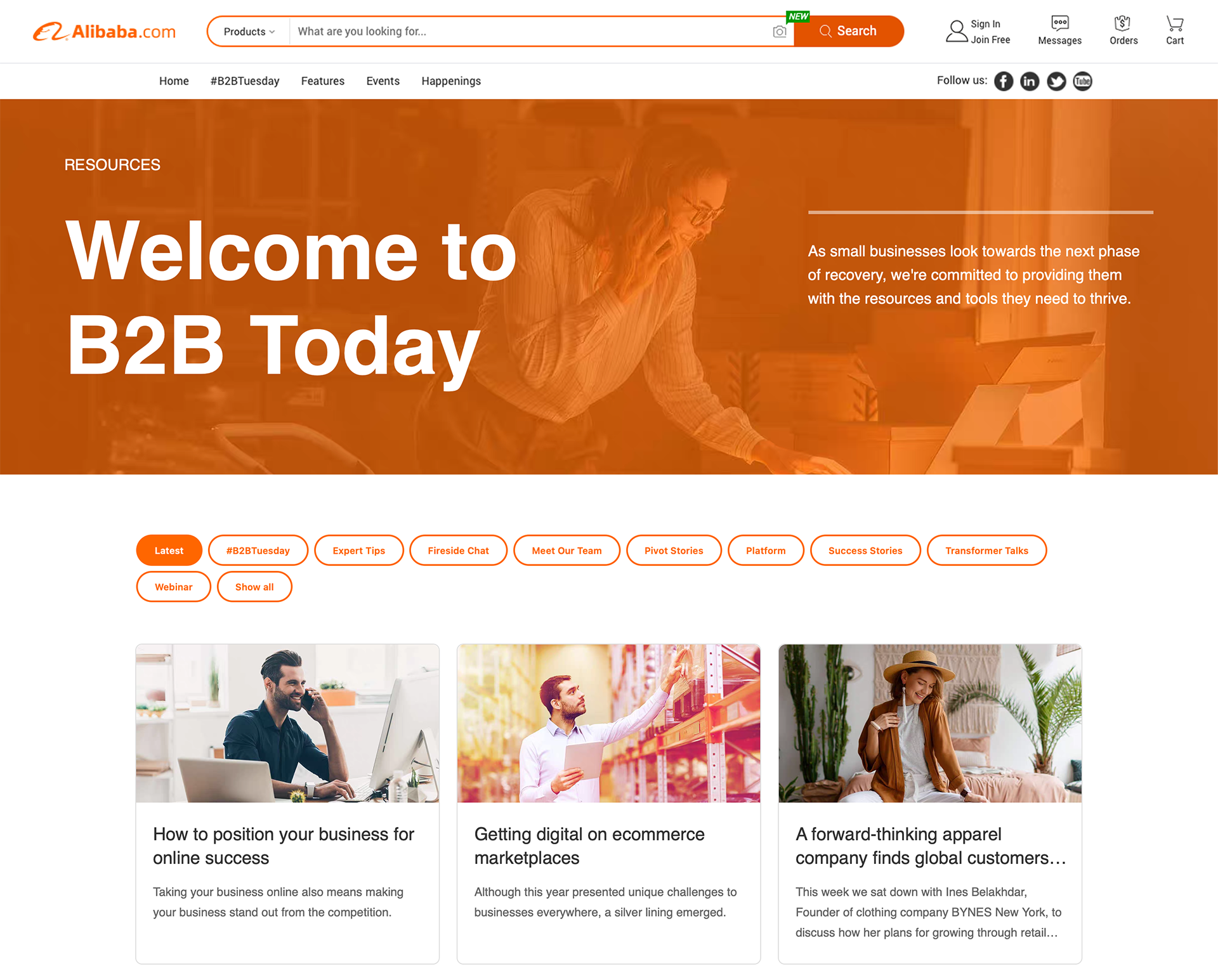
As the content library grew, the site structure needed to keep up. In January 2020 I added a dedicated #B2BTuesday listing page to house the growing archive of articles. The topics and categories were not guesswork. They came directly from customer feedback at events, from what the sales team was hearing in conversations with potential sellers, and from insights shared by the partners we worked with.
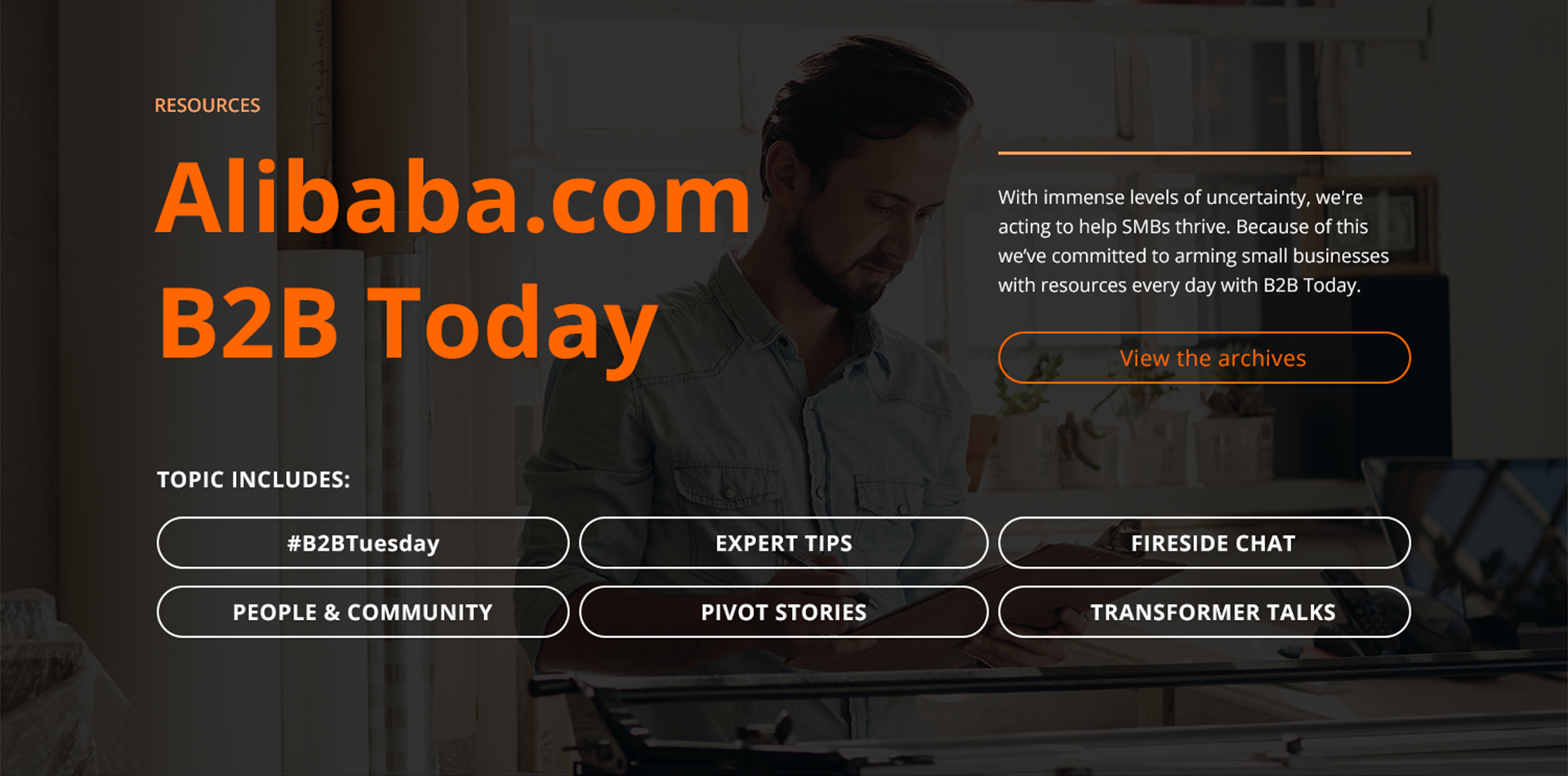
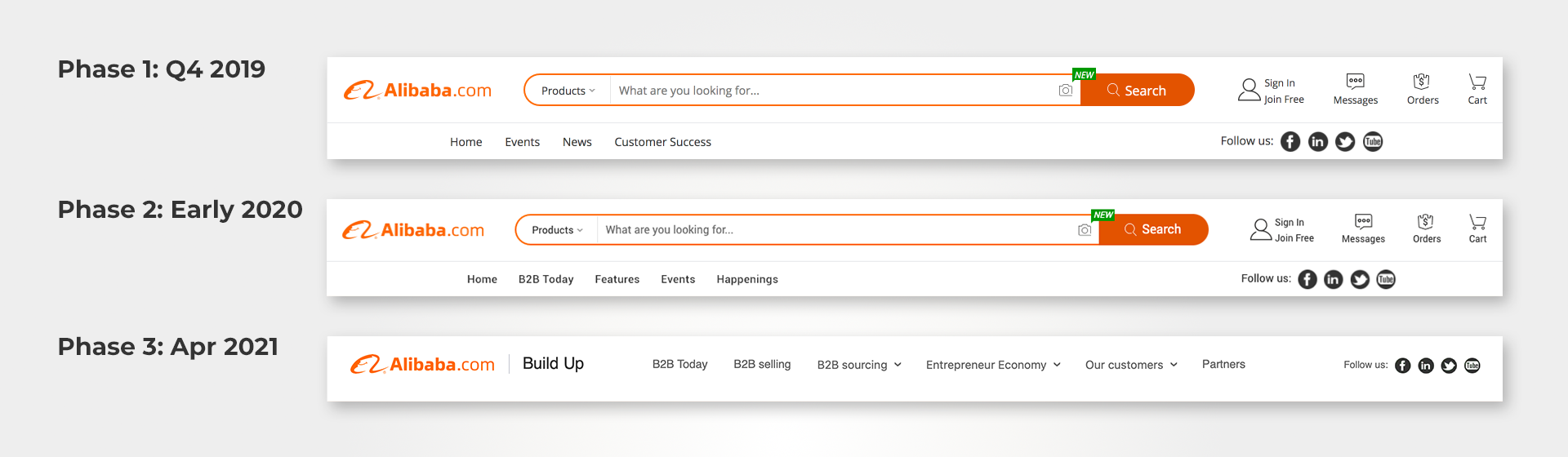
When the pandemic hit and the content program accelerated, #B2BTuesday evolved into B2B Today, a full content hub organized across nine topic categories. The navigation was restructured to reflect what the site had actually become. Build Up was designed to be a content resource, not an event promotion site, and registration data confirmed that very few event sign-ups came directly from the website. Moving content to the top of the navigation was the right call.
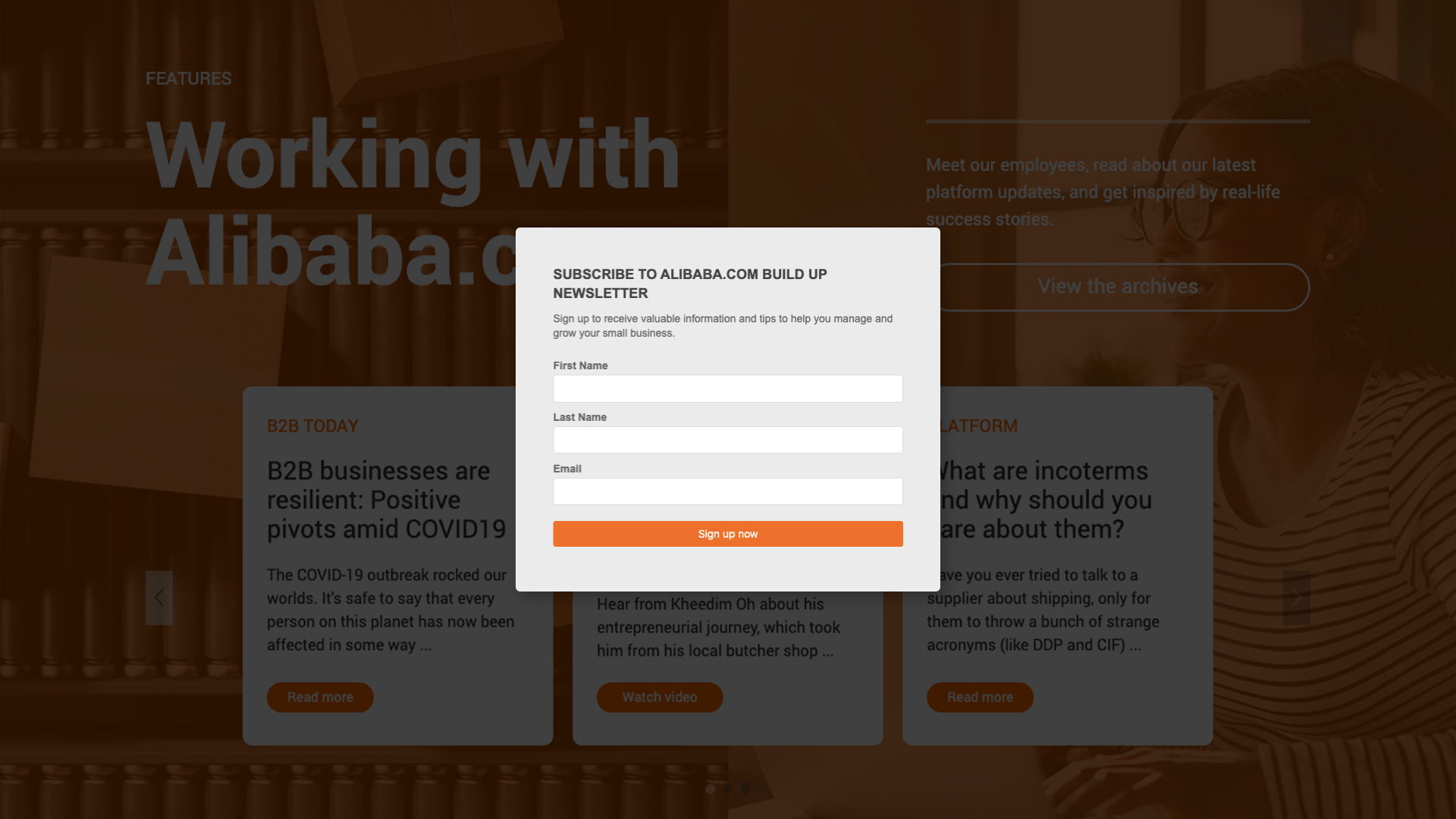
In April 2020, I identified a gap in lead generation and proposed adding a popup form through HubSpot, drawing on a tactic that had worked well on a previous project. To reduce intrusiveness, I set the trigger to activate only after a visitor had spent at least eight seconds on the page and scrolled through at least 50 percent of the content. Someone who had engaged that far was already showing intent. The popup became our primary lead capture mechanism and significantly increased lead volume alongside the embedded form already on the site.
PHASE 3: Site Restructure and Seller Success Hub (April 2021)
After a full year of publishing, the site had grown significantly. New content, new programs, and new initiatives were landing regularly, and the structure that worked at launch was no longer easy to navigate. Feedback from the sales team, customers, and partners made the problem concrete. People were struggling to find specific pages, and links that should have been surfaced in the navigation or on the homepage were buried. With a new fiscal year starting in April 2021 and more initiatives on the way, it was the right moment to rebuild the site around how people actually used it.
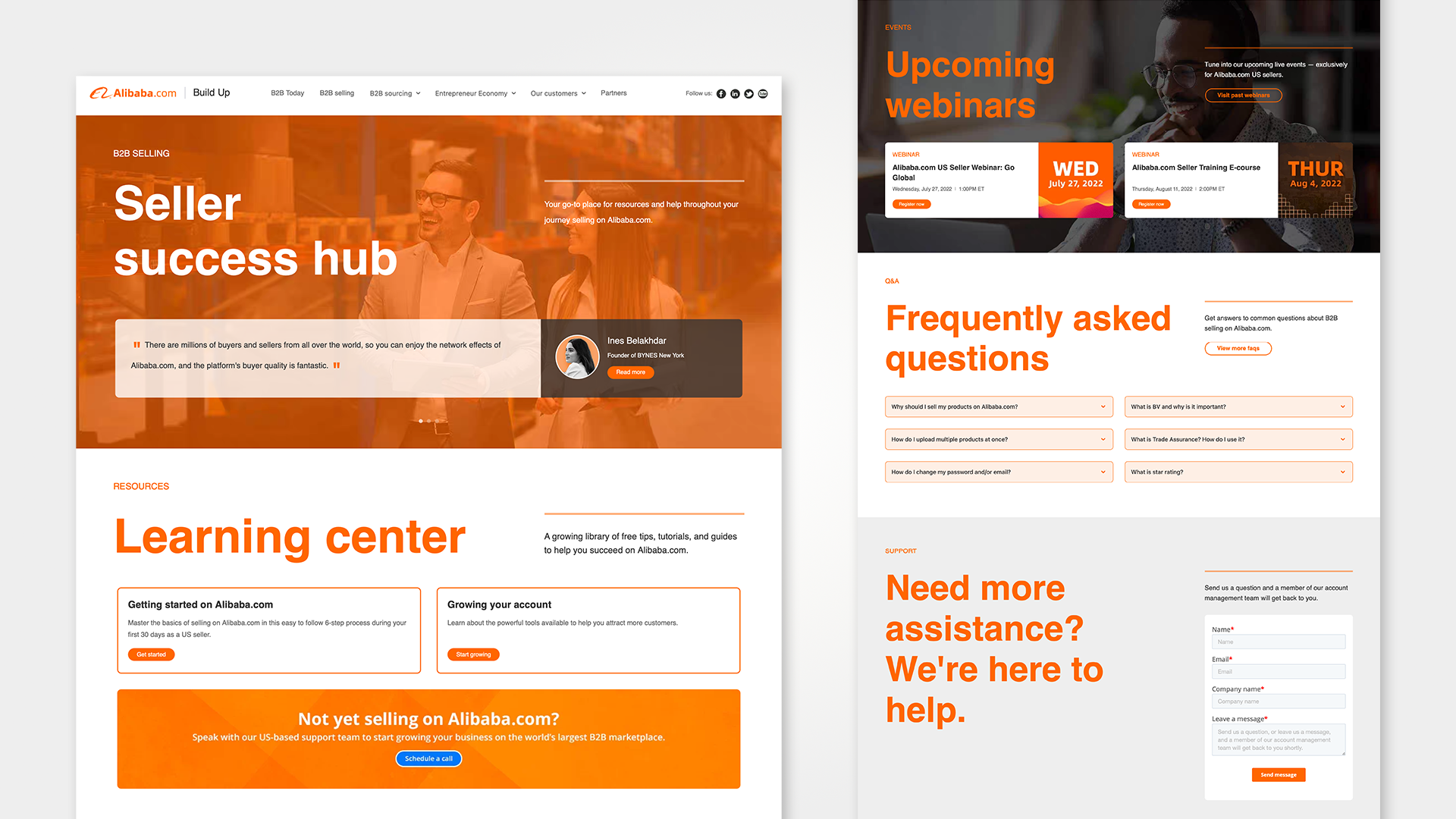
I revamped the homepage, expanded the navigation, and added lead capture forms at the bottom of key pages to capture intent from visitors who made it that far into the content. At the center of this phase was the launch of the Seller Success Hub, a dedicated learning center organized by selling stage, bringing together an events calendar, a FAQ section, and a support form in one place. The combination of a larger content footprint, better navigation, and more lead capture touchpoints supported a step change in the program’s reach. Lead generation grew more than 300 percent year over year from 2021 to 2022, with the popup form proving the most effective capture mechanism of the two.
Throughout the life of the project I worked across Sketch, Adobe Creative Suite, and HTML, CSS, and JavaScript for design and front-end development. HubSpot handled all lead capture forms and CRM, Google Analytics tracked site performance, and the site ran on Alibaba.com’s internal CMS. Trello kept the broader project coordination on track.
Results
Over four years, Build Up grew from a first-year initiative with no brand, no website, and no creative playbook into a national program with a recognizable identity, a content platform, and a measurable footprint across the U.S. small business community.
Results at a glance
Events
13
in-person events across 10 cities
20
digital events as the program went virtual
Content in FY21
180+
new pieces of content
20%+
social media follower growth
Content over 3+ Years
400+
posts published across 9 topic categories
130+
videos produced
Business Impact
300%+
YoY lead generation growth from 2021 to 2022
4x
revenue growth over the four years of the program
The numbers that matter most to me are the ones that took the longest to build. Lead generation growing more than 300 percent year over year did not happen because of a single campaign or a single decision. It was the result of a content platform that kept improving, a website that kept evolving to meet sellers where they were, and a brand identity that stayed consistent from the first event in Brooklyn through the last digital session three years later.
Revenue grew 4x over the life of the program. Build Up was a team effort across leadership, marketing, and sales, but the brand, website, and content platform I built over three years were foundational to how the seller program earned trust with USA sellers and kept them engaged long enough to convert.
Reflection
Build Up taught me what it means to own something over the long term, including the thinking behind it, the coordination around it, and the ongoing responsibility of keeping it alive and relevant as the program evolved. There was no blueprint for what we were building. The brand, the website, and the content platform all had to be figured out in motion, often under real time pressure.
The COVID period sharpened something I already believed about brand and content. When the in-person tour stopped, the program had a choice between pausing and showing up differently. Shifting the message toward Alibaba.com as a genuine ally to U.S. SMBs, not just a platform they could join, was the right call for that moment. It reinforced for me that brand strategy is not a soft discipline. It is what earns trust before a product can convert it, and content is how you deliver that trust at scale.
What I am most proud of is not any single deliverable. It is the consistency. The same visual identity that launched in Brooklyn in July 2019 was still recognizable three years and dozens of events later. That kind of continuity does not happen by accident. It requires deliberate decisions made early and defended consistently over time.
Ready to work together?
Let’s talk about what you’re building.